Road Safety Priorities in Focus at Regional Dialogues in Kuala Lumpur and New Delhi
Kuala Lumpur, Malaysia, and New Delhi, India | October 2026
Turning road safety commitments into action requires more than policies and targets. It takes reliable data, informed investments, stronger institutions, and regional cooperation.
These priorities featured in two major regional gatherings in October 2026: the Road Safety Congress 2026, held in Kuala Lumpur, Malaysia, on 19–20 October, and the World Health Organization (WHO) Regional Meeting for Road Safety: Toward Safer Mobility in the South-East Asia Region (SEAR), held in New Delhi, India, from 12–14 October.
The Asia-Pacific Road Safety Observatory (APRSO), a network of 27 member countries whose Secretariat is hosted by the Asian Development Bank (ADB), took part in both, highlighting the importance of integrating road safety into transport investments and strengthening support for country-level implementation.
Asia and the Pacific Must Get Back on Track
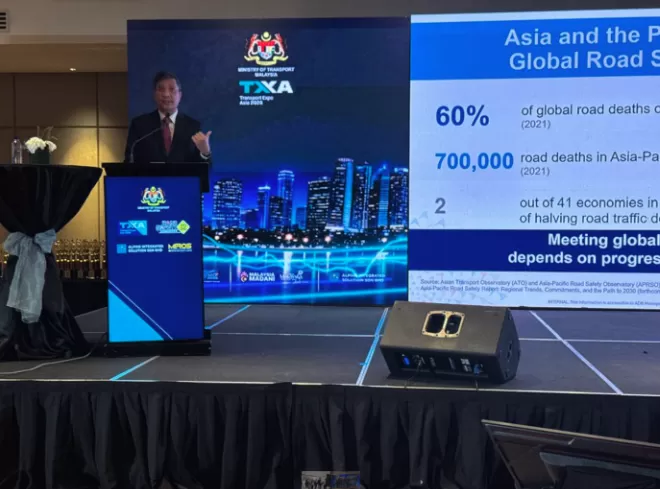
At the Road Safety Congress 2026, Bert Fabian, Senior Transport Specialist at ADB, delivered a keynote address on the region's road safety outlook and the actions needed to get back on track toward the global target of halving road deaths and serious injuries by 2030.
Fabian’s message was clear: global road safety targets cannot be achieved without substantial progress in Asia and the Pacific.
Powered two-wheelers remain a major challenge, accounting for more than a third of road traffic deaths across the region. Fabian highlighted proven interventions, including safer motorcycles, safer infrastructure, and greater use of quality helmets.
Safer vehicles and better road user behavior alone will not be enough, Fabian emphasized; road safety must be built into transport infrastructure from the outset and must be considered in infrastructure priorities, project design, and financing.
Fabian also joined a high-level dialogue on translating road safety policy into lives saved, alongside representatives from Malaysia's Ministry of Transport, the United Nations Economic and Social Commission for Asia and the Pacific (ESCAP), and the Singapore Road Safety Council.
The Congress brought together 100 stakeholders to discuss regional road safety priorities.
From Commitments to Implementation
Joining the WHO Regional Meeting for Road Safety in New Delhi virtually, Diana Hernandez-Louis, Transport Officer at ADB, spoke on the challenge of translating global road safety commitments into country-level action and ensuring that country priorities are supported by investment.
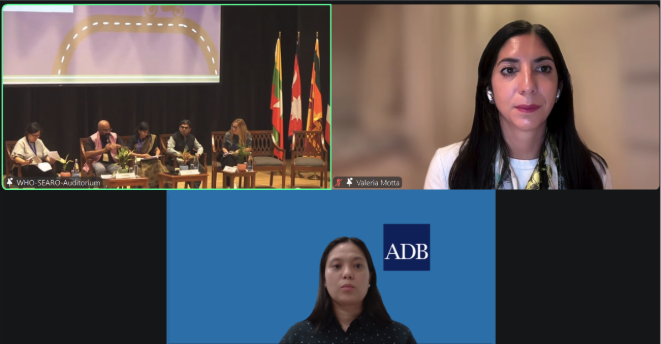
Hernandez-Louis described APRSO’s work in supporting regional collaboration and evidence-based decision-making. Through the Observatory, countries exchange road safety information and experience, supported by initiatives such as national road safety profiles and regional data-sharing efforts.
On a panel alongside representatives from UNICEF, the UN Road Safety Fund, and Vision Zero Academy, she discussed how development partners can better align financing, technical assistance, and capacity-building with country priorities.
Turning Regional Priorities into Action
The discussions in Kuala Lumpur and New Delhi reinforced a common message: achieving the goals of the Second Decade of Action for Road Safety 2021–2030 requires coordinated action, sustained investment, and stronger implementation at the country level.
APRSO will continue to support its member countries in turning these regional commitments into action through knowledge exchange, reliable data, and cooperation across Asia and the Pacific.