Road Safety in the Broader Transport Conversation at the 2026 Asia and the Pacific Transport Forum
In the 2026 Asia and the Pacific Transport Forum held by Asian Development Bank, road safety in Asia and the Pacific was a focus of targeted discussions and initiatives.
Across sessions that spanned aviation, maritime, and land transport, a clear thread emerged: safer transport systems are central to achieving wider goals on sustainability, public health, and inclusive development.
Where innovation meets safety
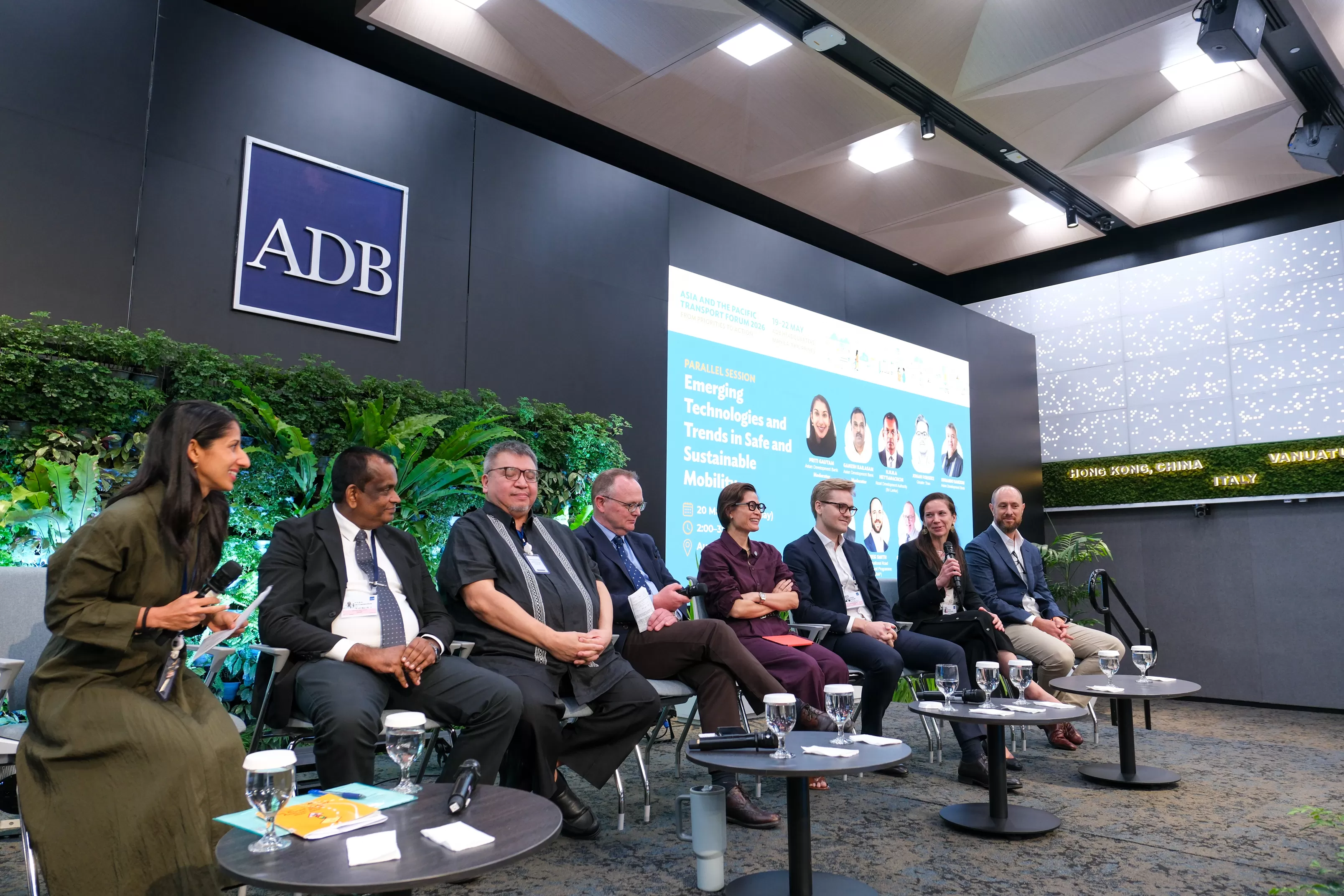
One session focused on how emerging technologies and system innovations are shaping safer and more sustainable mobility.
The discussion, entitled “Emerging Technologies and Trends in Safe and Sustainable Mobility”, looked at the issue of road safety alongside digitalization, decarbonization, and urban transformation.
Setting the scene, Priti Gautam (ADB) underscored the urgency of scaling solutions that are both evidence-based and implementable.
Country leadership and practical application were highlighted by Mr. Hettiarachchi (Road Development Authority) who shared about the Sri Lanka experience in embedding technology within their transport work.
A strong focus emerged on artificial intelligence (AI) and behavioral insights. Johan Forseke (Greater Than) showcased how AI-driven road user behavior systems can generate real-time insights into driving patterns. Eduardo Banzon (ADB) emphasized the critical links between transport and public health. This was complemented by Colin Broadwood (TRL), who highlighted advances in crash data technologies, including improved data collection, integration, and analytics.
The session also explored the role of the private sector in scaling innovation. Sherielysse Bonifacio (Grab) shared perspectives on financing and commercial models that make technology deployment viable at scale.
On the infrastructure side, Greg Smith (iRAP) presented emerging innovations in road assessment and design, reinforcing the importance of embedding safety into infrastructure from the outset. Relatedly, Sveta Milusheva (World Bank) brought attention to evidence-based financing for infrastructure performance.
Throughout the discussion, it was clear that emerging technologies hold significant promise for road safety if supported by robust data, stronger collaboration, and financing approaches that prioritize performance and long-term impact.
From data to decisions
That same message carried into a hands-on training session on Evidence and Technology to Drive Impact, which took place on May 22, 2026.
Participants who attended the training had a quick look at how impact evaluation is being used across different transport areas, from urban mobility and rural roads to road safety, gender and inclusion, and climate, from a brief presentation by Sveta Milusheva of the World Bank Group.
Priti Gautam and Zhigang Li of ADB provided several in-depth use cases, before participants broke out into groups to tackle the two exercises developed by ieConnect. Each exercise was built around a real project challenge and the kind of data that teams often already have access to—GPS, satellite imagery, mobile data. Participants’ task was simple but not easy as they were asked to explore how to use such information to make better decisions, through the tools and methods provided.
Moving forward with technology at the APRSO
For APRSO, the conversations began but did not end at the Asia and the Pacific Transport Forum. They point to where the work needs to go next: making better use of the data already at hand, learning from each other, and turning ideas into practical action on the ground.
The Observatory will continue to work with members to support this shift, helping countries move from insight to implementation and, ultimately, to safer roads for all.